
Abstract/Summary
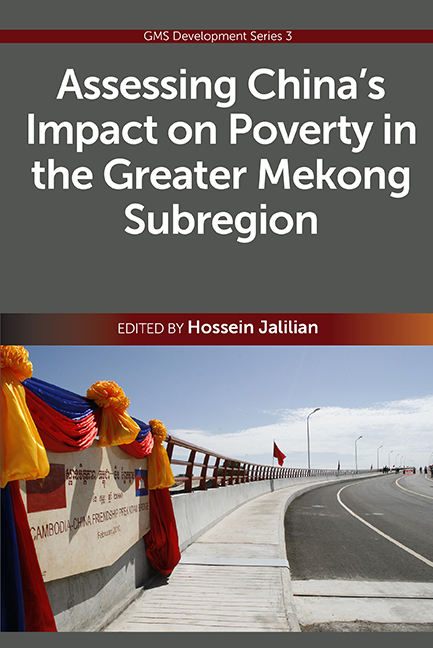
Since the dawn of the industrial revolution, and the ushering in of an era of global economic relations, the United States and Europe have been the core poles of economic power. However, China along with India is increasingly challenging the traditional economic hegemony. An issue of great importance is how this shift in the global economic balance of power will affect developing economies and the transition economies of the Greater Mekong Subregion (GMS), which are located in China's backyard and deeply integrated into its economy through regional supply chains. This volume examines the relationship between transition economies and the rise of China through presenting empirical case studies from the GMS. In doing so, it offers insights into the effect of China on developing countries in general, and offers practical policy directions for the place-specific economies of the GMS.
The book can be found via this link.
Related Publications
The Role of Digital Platforms and Cross-Border Trade in Cambodian Firm...
30-Sep-2026
Digital platforms are reshaping how firms access markets, manage transactions and participate in international trade. In...
The Economic Impact on Cambodia of International Energy-Market Disrupt...
28-Jul-2026
We use GTAP-FIN, a dynamic global computable general equilibrium model, to estimate the consequences for Cambodia of en...
Determinants of Informal Borrowing: Evidence from Households in 11 Rur...
12-Jun-2026
Informal borrowing remains an important source of financing for rural Cambodian households, exposing them to exploitativ...