Centre for Governance and Public Innovation
The Centre for Governance and Public Innovation (CGPI) conducts high-quality, policy-oriented research to strengthen institutional capacity, improve public sector performance, and support evidence-informed policymaking in Cambodia. The Centre generates practical knowledge that contributes to more effective, responsive, and innovative public institutions capable of meeting evolving development challenges. CGPI's research covers a broad range of governance priorities, with a central focus on public sector innovation. This includes public administration modernisation, decentralisation, public financial management, digital public services, and regulatory efficiency. The Centre actively examines how emerging technologies, artificial intelligence, and digital adoption can be leveraged to streamline processes, optimise public service delivery, and build future-ready governance frameworks. In addition to research, CGPI promotes knowledge exchange through policy dialogue, stakeholder engagement, capacity development, and strategic partnerships with government, development partners, academia, and the private sector. By bridging research, policy, and practice, the Centre supports the design and implementation of governance initiatives that are practical, responsive, and evidence-based. Through rigorous research and active policy engagement, CGPI aims to drive institutional modernisation, enhance service delivery, and support sustainable socio-economic development in Cambodia.
There is no data list!
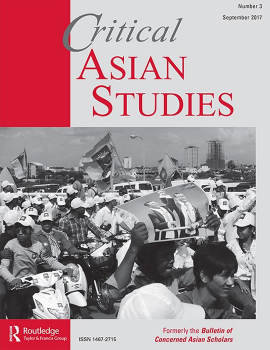
Facebook, Contestation and Poor People’s Politics: Spanning the Urban–Rural Divide in Cambodia?
Rural internet use, although still limited, is growing, raising the question of how rural people are using social media politically. As a vehicle of communication that permits the rapid transmission of information, images and text across space and connections between dispersed networks of individuals, does technological advance in rural areas presage significant political transformations? This art...
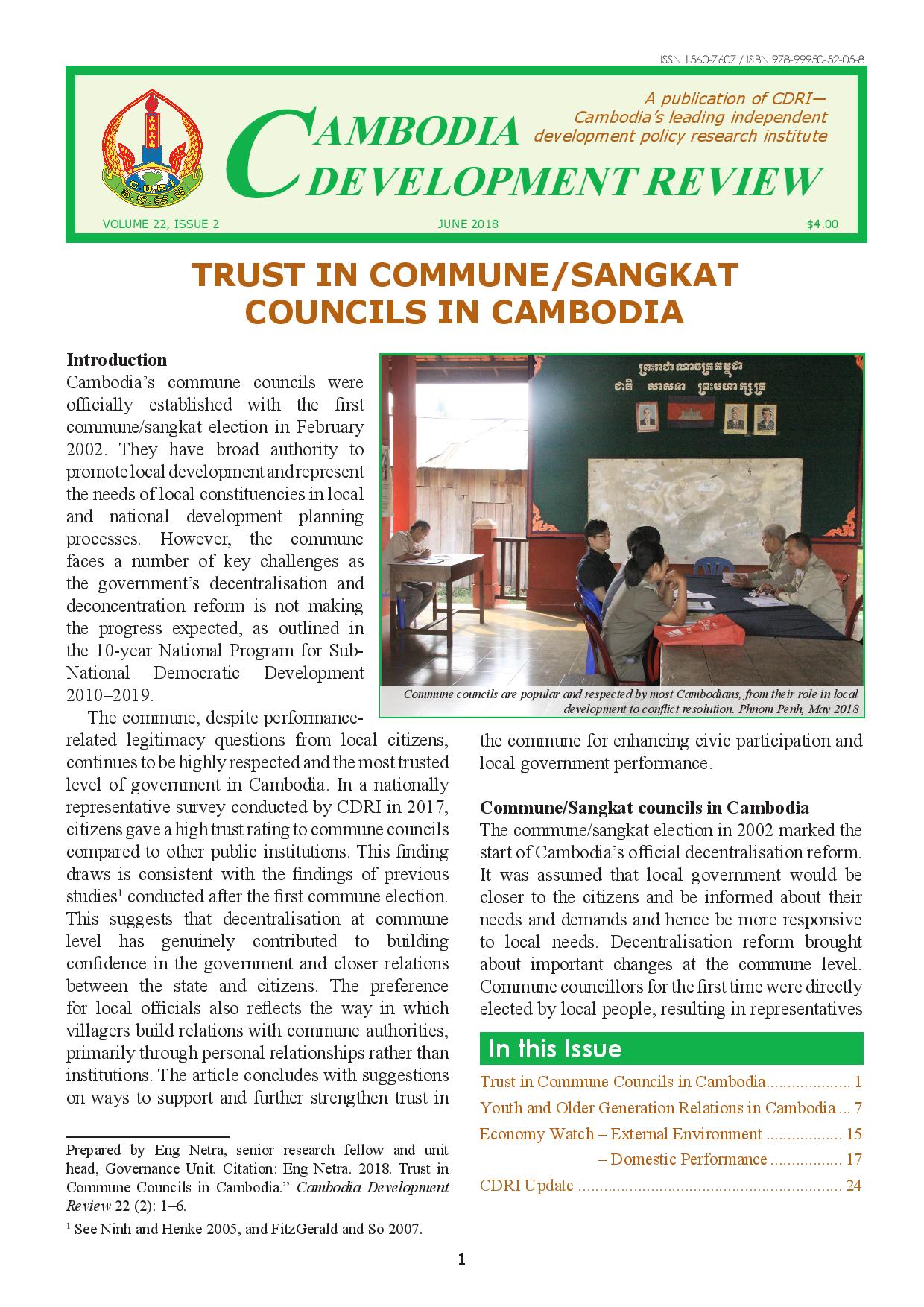
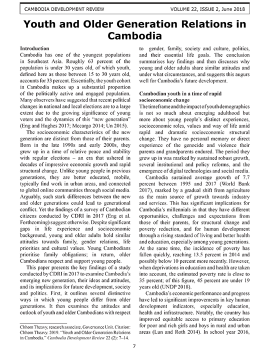
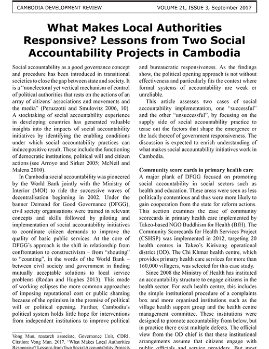
Coming of Age in Peace, Prosperity, and Connectivity: Cambodia’s Young Electorate and Its Impact on the Ruling Party’s Political Strategies
Cambodia’s youthful population is significantly responsible for a recent unexpected decline in the popularity of the Cambodian People’s Party, which has governed since the end of the Khmer Rouge regime. This increasingly young electorate has lived through an era of peace and openness with regular multi-party elections and impressive economic growth resulting in rapid structural change in the econo...
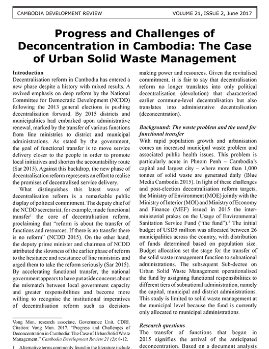
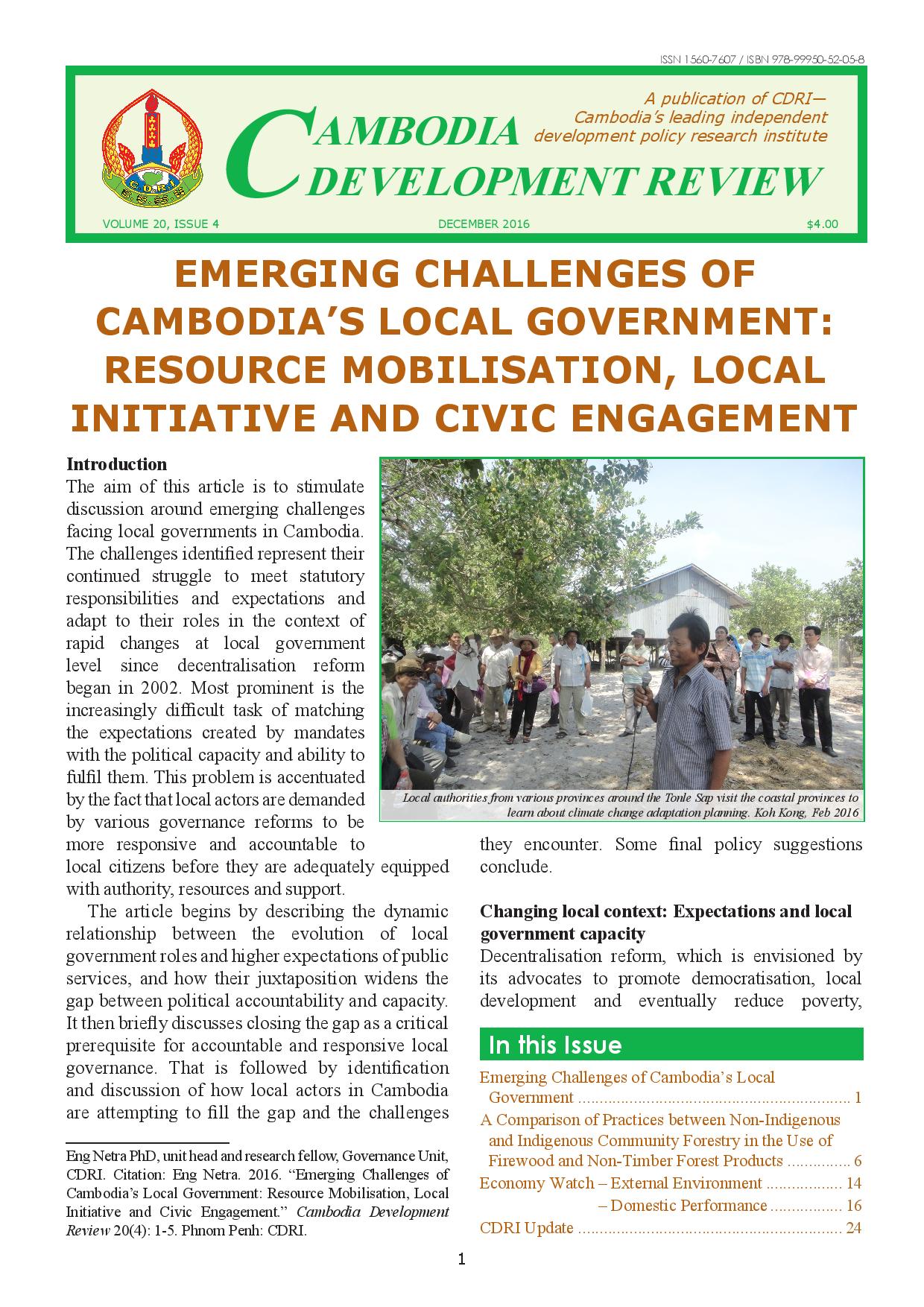
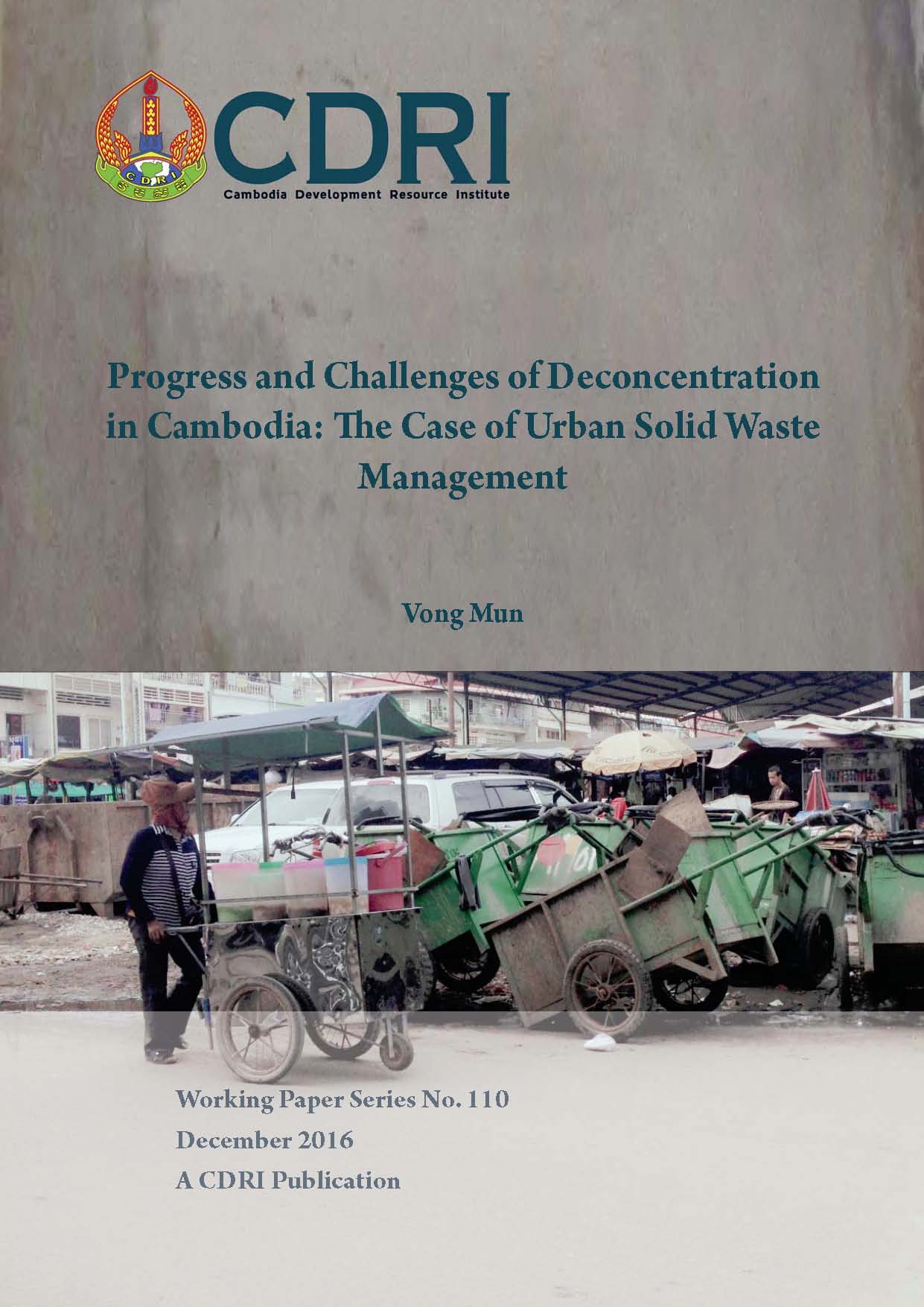
Progress and Challenges of Deconcentration in Cambodia: The Case of Urban Solid Waste Management
Rapid population expansion and urbanisation resultant of economic growth have greatly increased waste generation and associated public health issues. In light of these challenges, the Ministry of Environment jointly with the Ministry of Interior and Ministry of Economy and Finance issued in 2015 the inter-ministerial prakas on the Usage of Environmental Sanitation Service Fund with an initial...
Decentralization in Cambodia: New Wine in Old Bottles
The usual arguments for decentralization by its advocates are that it can achieve accountability, transparency, participation and democracy. In reaching these goals, however, proponents of decentralization reform have articulated concerns about whether government officials have sufficient capacity to implement decentralization policies, particularly at local level. This article asserts that in Cam...