
News
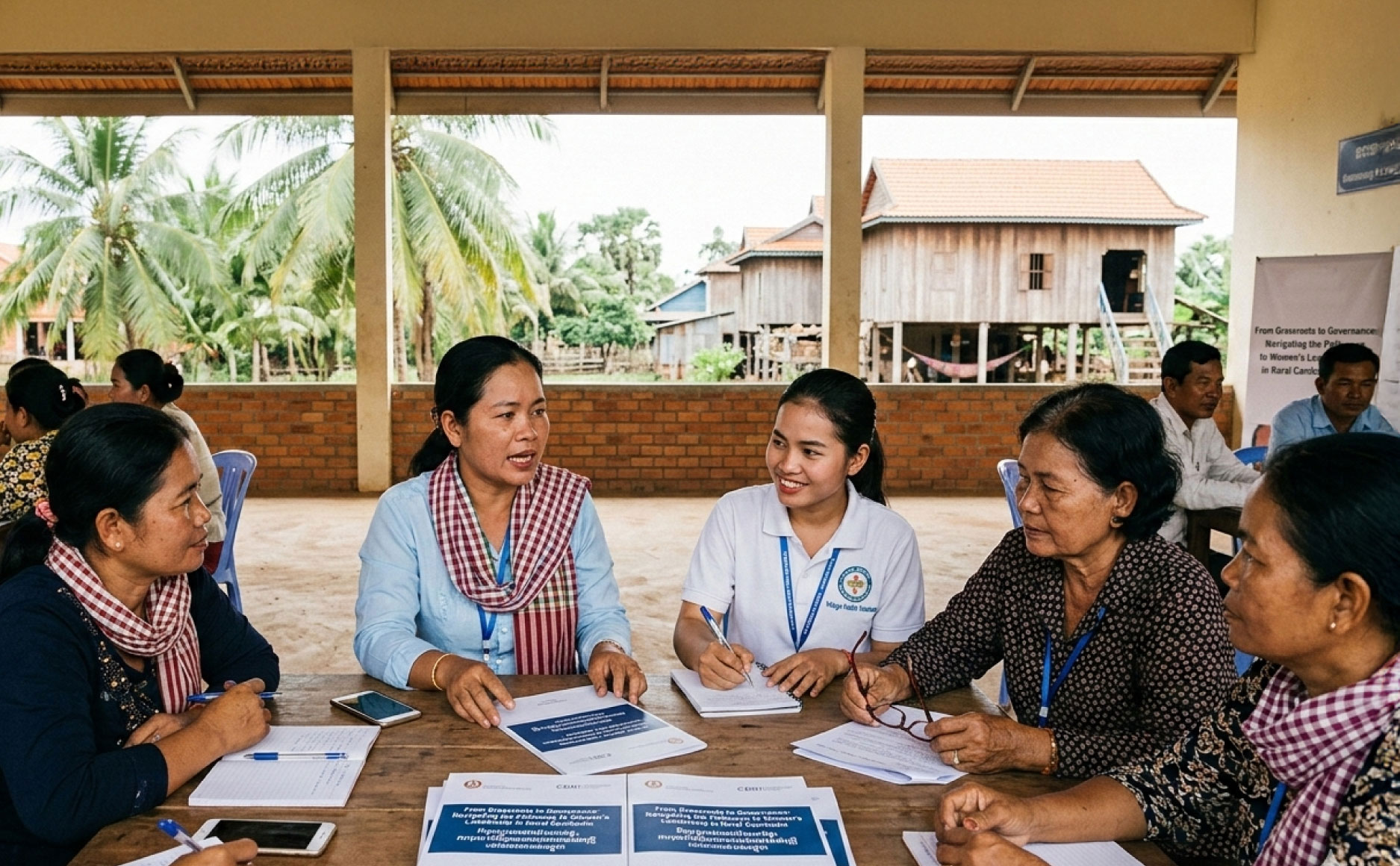
06 March 2026From Grassroots to Governance: Navigating the Pathways to Women’s Leadership in Rural Cambodia
Authors: Ms Sak Sreynoch and Dr Khath Bunthorn, Research Associates at CDRI’s Centre for Governance and Inclusive Society
Key messages
· The representation paradox: While
grassroots civic participation among women is remarkably high, this descriptive
representation does not seamlessly translate into substantive representation in
formal local leadership.
· Social capital as a stepping stone: For rural
women, volunteerism is not merely about skill-building; it is the primary
mechanism for accumulating the social capital and community trust necessary to
enter formal politics.
· Institutional culture and allyship: Building true
male allyship often requires bridging entrenched communication gaps; targeted
capacity training can strategically equip female leaders to navigate gender
dynamics, assert their perspectives, and win the respect of their male
counterparts.
· Emerging structural lessons: Bridging the
gap between community activism and formal governance requires targeted,
context-specific interventions, including formalised mentorship and equitable
household labour distribution—alongside structural reforms within political
parties to prioritise women for executive roles like the Commune Chief.
Women’s participation in local governance is a recognised catalyst for inclusive community development and responsive public service delivery. Yet, a persistent paradox remains: women are highly active in grassroots civic life but severely underrepresented in formal decision-making roles.
Currently,
women hold just 14 percent of seats on Commune/Sangkat Councils, and only 10.5
percent (173 out of 1,652) serve as Commune Chiefs. These roles represent the
primary seats of formal authority, holding the legal mandate to manage local
budgets and administrative policy. While these statistics highlight a clear
gender gap, they do not capture the underlying institutional hurdles or the
lived experiences of those navigating these systems.
To unpack
the mechanisms behind this gap, we conducted qualitative fieldwork in Kampong
Chhnang province in June 2024. Selected for its dynamic socio-economic
transition and active commune councils, the province serves as an ideal lens for
examining rural political trajectories. While this qualitative approach—based
on in-depth, semi-structured key informant interviews with six local leaders
(five women and one man)[1]—does
not offer a comprehensive, nationwide baseline, it provides a crucial
exploratory snapshot of the lived experiences of rural leaders. Through this localised
lens, this blog explores the intersection of individual agency and systemic
structures that define women’s pathways to local leadership.
The grassroots
paradox: High participation, low power
Our
fieldwork revealed a striking baseline of female civic engagement. Community
Accountability Facilitators (CAFs), Usaphea (39) and Sreyleap (32), highlighted
the robust presence of neary sakam (active women) in local affairs. They
observed that women frequently account for 70 to 90 percent of attendees at
public commune meetings.
However,
this high level of descriptive representation—having women in the room—rarely
translates into substantive representation, where women hold the authority to
shape policy and resource allocation. Transitioning from a community
participant to a formal political leader requires navigating a complex web of
social and institutional barriers.
Building
the foundation: Social capital and individual agency
For women
entirely outside the formal political sphere, breaking in requires immense
individual agency and the deliberate cultivation of networks.
Volunteering
as a mechanism for social capital
We found
that volunteerism serves as the critical bridge between the private sphere and
public office. It is not merely a chance to learn administrative skills; it is
how women build social capital—the localised trust, visibility, and networks
necessary to mount a successful political career. Several leaders we
interviewed, including Heng, Sophea, and Chantima—now heads and focal persons
for the Commune Committee for Women and Children (CCWC)—leveraged volunteerism
as their entry point. Heng (72) and Sophea (36) previously volunteered for
Gender and Development for Cambodia (GADC), where they received mentoring that
demystified the political process. Similarly, Chantima (24) parlayed her
visibility as a village health volunteer into a formal CCWC role.
Personal
drive overcoming structural deficits
When
institutional or structural support is absent, personal agency must fill the
void. Family dynamics often dictate a woman’s political viability, serving as
either a launchpad or a barrier. Chantima benefited from unwavering familial
support, which absorbed the logistical burdens of her community work.
Conversely, Heng and Sophea noted an initial lack of encouragement from their
husbands. Their eventual success was driven by sheer personal determination,
demonstrating that while unsupportive family structures complicate the journey,
fierce individual agency can overcome them.
Navigating
the institution: Structural barriers and enablers
Once women
accumulate the social capital to enter formal governance, their ability to
thrive depends heavily on the institutional structures and norms within the
commune council.
Institutionalising
support through mentorship
Mentorship
transforms individual success into systemic change by creating a pipeline of
female leaders. Heng, inspired by a former female commune chief, entered
politics in 2007 and rose to the position of second deputy chief. Crucially,
Heng utilised her platform to mentor Sophea, who was subsequently elected as
the first deputy chief of a neighbouring commune. This cascading effect
highlights how female role models lower the psychological and practical
barriers to entry for the next generation.
The
limits and necessities of male allyship
The role
of male colleagues in shaping institutional culture cannot be overstated.
Sophat (72), a male commune chief, recognised that his female council members drove
tangible improvements in social services and community hygiene.
However,
navigating male-dominated spaces remains a practical challenge. Sophea noted
that while female councillors often have a more nuanced understanding of
community vulnerabilities, communicating these priorities to male counterparts
can be difficult. She highlighted that capacity training in gender awareness
equipped her and other female councillors with the tools to bridge this gap and
better navigate men’s perspectives. This strategic adaptability was
instrumental in earning the respect of their male peers and local citizens,
ultimately unlocking crucial male allyship. This underscores how targeted
capacity building can help women effectively navigate and influence the
institutional culture around them.
Emerging
lessons and areas for exploration
Despite the resilience of leaders in Kampong Chhnang, the barriers to female leadership—disproportionate household care burdens, and entrenched political cultures—remain largely systemic. While these findings reflect a specific localised context, they highlight several potential pathways that warrant further exploration by local and national stakeholders:
- Exploring formalised mentorship: Local governance frameworks could pilot structured mentorship networks, connecting veteran female politicians with emerging community volunteers to see if the Kampong Chhnang model scales.
- Reevaluating capacity building: Rather than solely training women to navigate male-dominated spaces, policymakers might explore gender-transformative training for male local leaders to cultivate genuine allyship and inclusive council environments. Currently, female leaders are often relegated to “women’s affairs” roles, such as the CCWC. However, our fieldwork reveals that both men and women view female leaders as having a better understanding of villagers’ complaints and local grievances. This suggests a much wider scope for women’s roles; by training male leaders to foster more inclusive environments, councils can better leverage this unique capacity for responsive service across all areas of local governance.
- Debating structural reforms: As qualitative evidence points to steep systemic barriers, there is an ongoing need for a broader national conversation regarding structural reforms, particularly within political parties, which play a decisive role in candidate nomination and leadership selection. Strengthening internal party policies, such as prioritising and supporting female candidates for winnable positions, could significantly improve women’s chances of being elected as commune chiefs.
By
addressing both the individual need for social capital and the structural need
for institutional reform, Cambodia can ensure that the women filling the seats
at public meetings today become the commune chiefs of tomorrow.
[1] Note: All names of the local leaders and research participants mentioned in this blog post are pseudonyms to protect their privacy and ensure confidentiality.
Related News
CDRI Board of Directors Meeting
04 November 2020The Board of Directors (BoD) of the Cambodia Development Resource Institute (CDRI) met at a virtual meeting on 3rd November 2020. All 10 existing BoD members attended and actively engaged in the deliberation and comments. For further information about CDRI BoD, please visit CDRI...
CDRI Deliveries Keynote at National Conference on Land and Natural Resources Governance
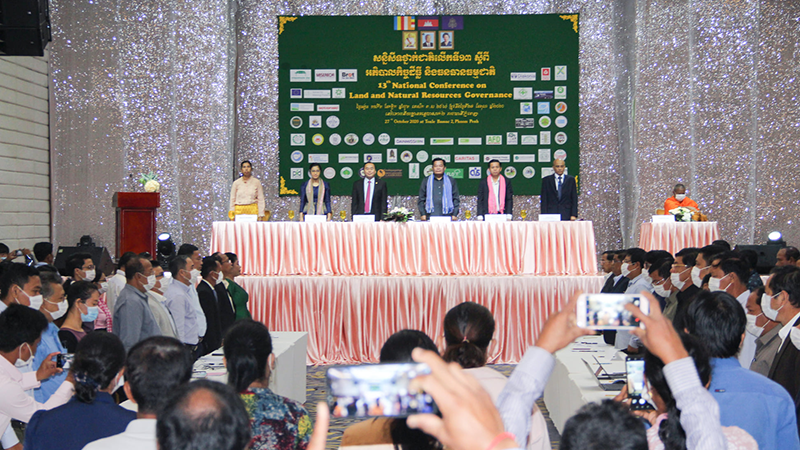
27 October 2020CDRI Senior Management was invited to deliver a key-note on the Land and Natural Resources Governance at the National Conference on Tuesday, October 27, 2020, at the Bassac II. It was attended by over 150 participants from the provinces, key ministries and departments, and repres...
Training on Introduction to R for Quantitative Data Analysis
04 February 2021In collaboration with The Asia Foundation and under financial support from the Australian Department of Foreign Affairs and Trade (DFAT), the Centre for Educational Research and Innovation (CERI) has organizing a three-day intensive workshop on “Introduction to R for Quantitative...