
News
26 June 2026Strengthening STEM Education in Cambodia: Why Teacher Professional Development Matters
Author: Ms Heng Sok Mean, Research Assistant at CDRI’s Centre for
Educational Research and Innovation
Key Highlights
- Despite the government’s efforts in
building Science, Technology, Engineering, and
Mathematics (STEM) human capital, student enrolment in the science track
has dropped significantly between
- What happens inside the classroom has been found to be one of the key factors influencing students’ learning track choices.
- While overall access to Continuous Professional Development (CPD) for teachers has expanded, professional development in specialised areas like project-based learning and interdisciplinary STEM remains limited.
- Access to CPD is uneven across schools. Disparities also persist based on gender, urban-rural location, and professional role. Translating CPD into actual classroom practice is hindered by content-heavy curricula, resource constraints, and a lack of interdisciplinary collaboration among teachers.
- Implementing need-based training, enhancing equity through knowledge-sharing networks, improving school facilities, and reforming assessments to prioritise problem-solving and practical application over rote learning can help strengthen the CDP system.
As Cambodia continues its transition towards a
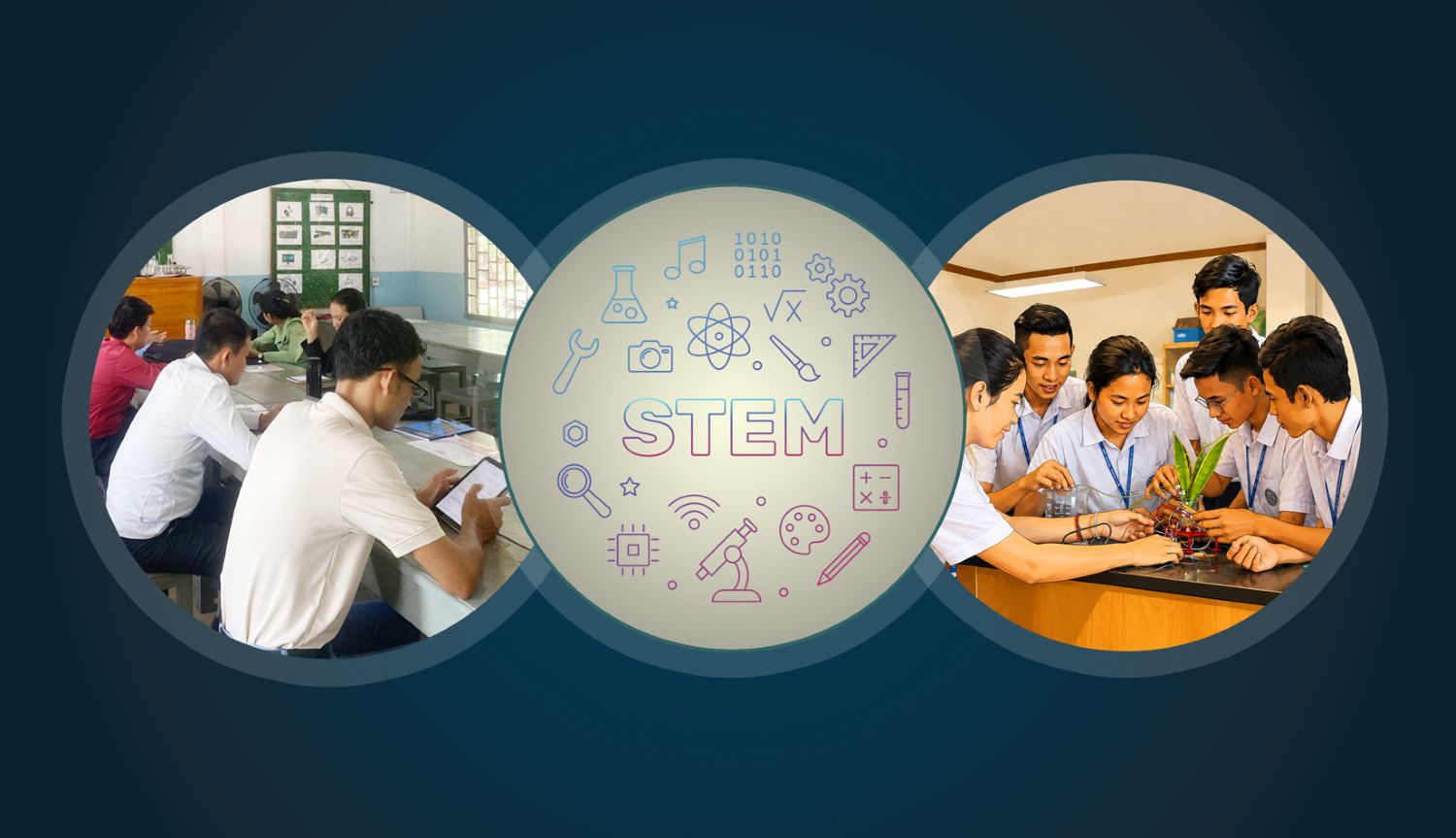
more knowledge-based and digital economy, Science, Technology, Engineering, and
Mathematics (STEM) education has become increasingly important to the country’s
long-term development. In 2023, only 12
Despite these efforts, student participation in
STEM streams remains a concern. Between the academic years 2012–2013 and
2025–2026, student enrolment in the science track declined from around 90
To better understand this issue, the Cambodia
Development Resource Institute (CDRI) conducted a study titled “STEM
Teachers’ Continuous Professional Development: Opportunities, Challenges, and
Policy Implications in Cambodia.” Using a mixed-methods approach, the study
examined the accessibility of Continuous Professional Development (CPD)
opportunities for upper secondary STEM teachers, as well as teachers’
perceptions of their effectiveness and practical challenges. The research drew
on surveys with 401 teachers conducted in 2025 from across Cambodia,
complemented by qualitative interviews conducted in selected upper secondary
schools.
The Current Landscape of STEM CPD in Cambodia
CPD refers to ongoing activities designed to strengthen teachers’ pedagogical knowledge, subject expertise, and classroom practice. In Cambodia, CPD for STEM teachers generally operates across four levels:
- National level: The Ministry of Education, Youth and Sport (MOEYS), often in collaboration with development partners and Teacher Education Institutions such as the National Institute of Education (NIE), organises structured training workshops and technical programmes. Some non-governmental organisations also contribute to teacher training initiatives.
- Cluster level: Groups of nearby schools collaborate through school clusters to share experiences, exchange teaching practices, and conduct joint training activities.
- School level: Schools commonly organise monthly technical meetings, classroom observations, peer-learning sessions, and short in-house training activities.
- Individual level: Teachers also engage in self-directed professional learning through reading, action research, or further formal education.
At present, STEM-related CPD in Cambodia is
largely driven through national workshops and school-based activities supported
by major education projects funded by development partners, including the Asian
Development Bank (ADB) and the World Bank.
CDRI’s survey of the 401 teachers found that
access to CPD has expanded considerably in recent years. Around 79
However, participation in more specialised STEM pedagogical training remains comparatively limited. While many teachers had received training related to inquiry-based learning or technology integration, fewer had opportunities to engage in areas such as project-based learning, scientific equipment operation, or interdisciplinary STEM teaching approaches (see Figure 1).
Figure 1: Topics of workshops in the last five
years
 Source: Author
Uneven Access to
Professional Development
The study also points to notable disparities in
CPD access. Teachers working in resource schools, established to enhance
educational quality through upgraded facilities, typically have greater access
to training than those in ordinary public schools. Currently, there are around
50 resource schools across the country.
As seen in Figure 2, nearly all surveyed
teachers in resource schools (95 percent) reported participating in workshops
within the past five years, compared to only around one-third (32 percent) of
teachers in non-supported schools. Differences were also observed across
gender, geographic location, and professional role, with male teachers, urban
teachers, and technical teacher leaders often reporting greater access to
training opportunities.
These findings suggest that, while Cambodia has
made significant progress in expanding CPD opportunities, access remains uneven
across different school environments.
Figure 2: Number of workshops attended within
the last five years

Source: Author
Challenges in
Translating Training into Classroom Practice
Access to training alone does not automatically
lead to changes in classroom practice. Many teachers reported difficulties
applying newly learned approaches within their everyday teaching environments.
One major challenge relates to curriculum and
assessment structures. Cambodia’s curriculum remains content-heavy and
examination-oriented, leaving limited classroom time for experiments,
inquiry-based activities, and problem-solving exercises that are central to
STEM learning.
Resource constraints also continue to affect
implementation, particularly in schools with limited laboratory equipment,
teaching materials, or reliable internet access. In some cases, teachers who
receive training on hands-on STEM methods return to classrooms where the
necessary resources to apply these approaches are unavailable.
The study also found that interdisciplinary
collaboration remains limited in practice. Although STEM education encourages
integration across science, mathematics, and information and communication
technology (ICT) subjects, some teachers continue to view these disciplines
separately. STEM is often associated primarily with science experiments, making
it more difficult for mathematics and ICT teachers to identify meaningful
cross-subject connections.
Another important challenge concerns the
sustainability of CPD itself. Many training activities continue to rely heavily
on short workshop-based formats. While these workshops provide valuable
exposure to new methods, teachers often require longer-term mentoring,
follow-up support, and opportunities for peer exchange to adapt new ideas
effectively within their classroom contexts. Without sustained support,
innovative teaching approaches may gradually give way to more familiar
lecture-based practices.
Moving Towards More
Sustainable STEM CPD
The findings suggest several areas where
Cambodia’s STEM CPD system could be further strengthened.
First, CPD programmes would be more effective by
introducing differentiated training approaches that consider teachers’ existing
skill levels and school conditions. Encouraging greater collaboration among
science, mathematics, and ICT teachers during workshops may also help
strengthen interdisciplinary STEM teaching.
Second, there are opportunities to further
improve equity in access to CPD by strengthening knowledge-sharing networks
between well-resourced schools and neighbouring schools with fewer training
opportunities. Existing teacher development frameworks could support more
peer-learning and local mentoring systems.
Third, improving classroom implementation
requires broader support beyond workshops alone. Continued efforts to
strengthen school facilities, teaching materials, internet connectivity, and
practical learning resources remain important for enabling teachers to apply
learner-centred STEM approaches more consistently.
Finally, assessment reform plays an important role in supporting STEM transformation. Greater emphasis on problem-solving, scientific reasoning, and practical application within examinations can encourage more interactive and inquiry-based classroom practices.
This study was supported by the Australian Government through The Asia Foundation's Ponlok Chomnes II: Data and Dialogue for Development in Cambodia program. The views expressed in this study are the author's alone and are not necessarily the views of the Australian Government and The Asia Foundation.
Related News
CDRI Board of Directors Meeting
04 November 2020The Board of Directors (BoD) of the Cambodia Development Resource Institute (CDRI) met at a virtual meeting on 3rd November 2020. All 10 existing BoD members attended and actively engaged in the deliberation and comments. For further information about CDRI BoD, please visit CDRI...
CDRI Deliveries Keynote at National Conference on Land and Natural Resources Governance
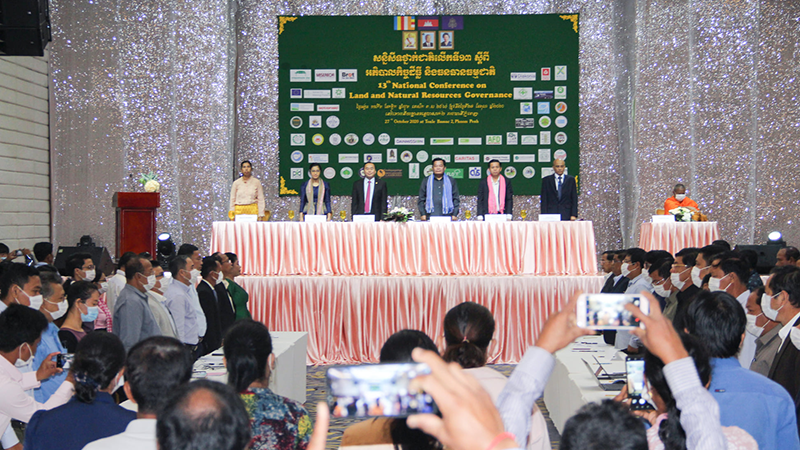
27 October 2020CDRI Senior Management was invited to deliver a key-note on the Land and Natural Resources Governance at the National Conference on Tuesday, October 27, 2020, at the Bassac II. It was attended by over 150 participants from the provinces, key ministries and departments, and repres...
Training on Introduction to R for Quantitative Data Analysis
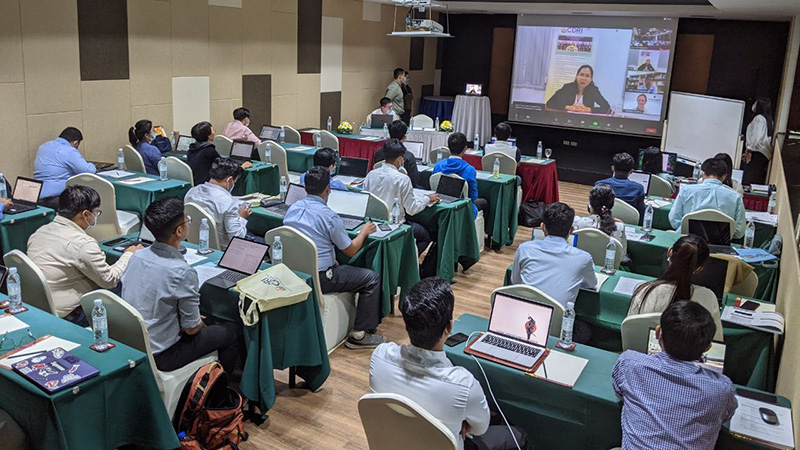
04 February 2021In collaboration with The Asia Foundation and under financial support from the Australian Department of Foreign Affairs and Trade (DFAT), the Centre for Educational Research and Innovation (CERI) has organizing a three-day intensive workshop on “Introduction to R for Quantitative...