Centre for Policy Research in Agriculture and Rural Development
The Centre for Policy Research in Agriculture and Rural Development (CPARD) is committed to carrying out cutting-edge, evidence-based, policy-relevant research focusing on Cambodia’s agriculture sector. We bring a wealth of expertise and experience to all our research activities which are locally and internationally acknowledged for their rigor. Our experienced researchers with expertise in agricultural economics, applied economics, and economic development develop and apply innovative quantitative and qualitative tools to study numerous critical issues in the field of agriculture, including nutrition and food safety, agricultural value chains, agricultural sustainability, agricultural development, and rural livelihood improvement. Our dissemination efforts target policy makers, development partners, and research community through publications, seminars, workshops, conferences, and dialogues. Having partnerships with government agencies, local and international think-tanks, and other research institutes, we hope to make a meaningful contribution to a sustainable future of Cambodia’s agriculture and improve the well-being of people residing in rural communities.
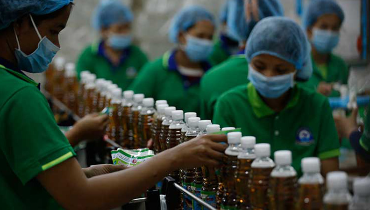
Potential Business in Cambodia
Khmer EnterpriseSmall-and medium-size enterprises (SMEs) are regarded as backbone of Cambodia’s economic growth (IFC 2010; Shariff et al. 2010). The number of formally registered SMEs is about 43,258 establishments, based on 2021 annual report by...
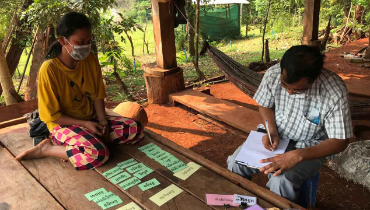
Cambodia Nutrition Project's Baseline Data Collection for Qualitative Evaluation Study
The World BankTo improve undernutrition challenge, a five-year The Cambodia Nutrition Project (CNP) was formulated with The MOH and the National Committee for Sub-national Democratic Development (NCDDS) of the Ministry of Interior are the imple...
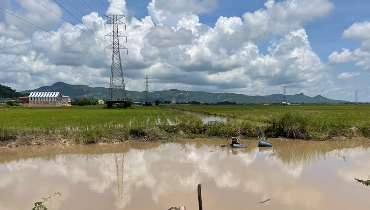
Promoting Small-holder Farmers through Irrigation
International Fund for Agriculture DevelopmentMore than 60 percent of Cambodia farmers grow rice, also, rice farmers mostly are smallholder suffering from low productivity, inadequate infrastructure, and vulnerability to flooding and drought. Remote smallholders might not ben...

Impact Evaluation of Community-Based Childcare Centres (CBCCs)
The World BankTo design, administer, and disseminate the results of an impact evaluation of community-based day-cares for the children of garment factory workers (CBCC) in Kampong Speu Province, Kandal Province, and other areas. To design a rig...
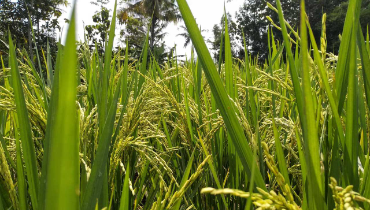
Comparative Study for Sustainable and Better Market Access of the Regional Rice Sector
Institute of Policy Strategy for Agriculture and Rural DevelopmentAs part of comparative study, the content of this study focuses on the rice sector and market access in Cambodia. The comparatives study is essential for the region because of the important role of the rice sector in national econ...
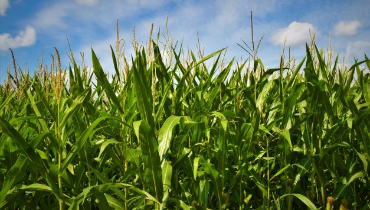
Cambodia's Agri-Food Trade: Structure, Challenges, New Emerging Potentials, and Impacts of Covid-19
International Food Policy Research InstituteFrom the early 1990s, Cambodia’s agricultural food trade was seen as exports of raw materials and unprocessed primary commodities to neighboring countries such as Thailand and Vietnam. The production and processing capacity were r...
Network for Agriculture and Rural Development Thinktanks (NARDT) for Countries in Mekong subregion
International Fund for Agriculture DevelopmentThe Network of Agriculture and Rural Development Think-tanks (NARDT) project is designed to form a consortium with flexible cooperation mechanism where think tanks of different stakeholders of Cambodia, Myanmar, Lao and Vietnam ca...
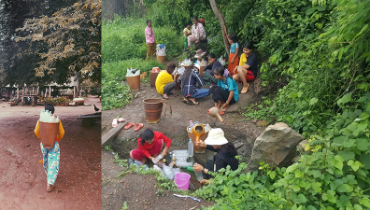
Cambodia Gender and Inclusive Development Analysis (GIDA)
United States Agency for International DevelopmentThis study aims to fill this gap in research by conducting a Gender and Inclusive Development Analysis (GIDA) combining qualitative and quantitative approaches. The GIDA is intended to inform USAID’s work plans regarding the Cambo...
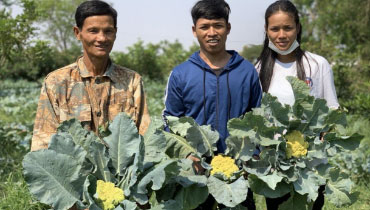
Mid-Term Performance Evaluation of HARVEST II Project
United States Agency for International Development-CambodiaThe project was funded by the United States Agency for International Development in partnership with Mitchell Group, Inc. (TMG). The project was to conduct mid-term evaluation on HARVEST II project.
There is no data list!
Cambodia Macroeconomic Impacts of Public Consumption on Education — A Computable General Equilibrium Approach
Lack of human capital is seen as one of the most significant constraints for Cambodia to be more competitive and to reach upper-middle-income country status. A recent discussion among researchers, policymakers, the private sector and development partners reached a broad consensus that a skills gap is emerging in Cambodia. In spite of concerted efforts, policymakers and bureaucrats still face chall...
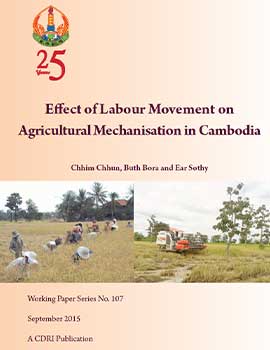
Effect of Labour Movement on Agricultural Mechanisation in Cambodia
This paper looks at the effect of labour movement on farm mechanisation in rural Cambodia. The study focuses on labour movement from on-farm towards off-farm jobs, and uses investment in agricultural machinery as a proxy for farm mechanisation. Statistics show that in recent years there has been a huge outmigration from rural areas. This has had significant impacts on farming practices across the...
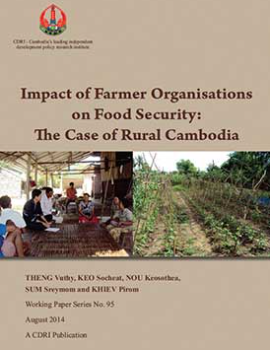
Impact of Farmer Organisations on Food Security: The Case of Rural Cambodia
This study assesses the impact of participation in farmer organisations (FOs) on the food security of rural households in Cambodia. The study was started in November 2010 and completed in June 2012. The study set out to: (1) examine the roles, operations and challenges of FOs in improving household food security; (2) analyse the household characteristics that determine participation in FOs; (3) a...
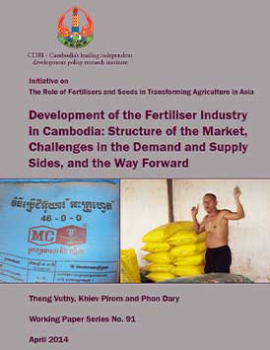
Development of the Fertiliser Industry in Cambodia: Structure of the Market, Challenges in the Demand and Supply Sides, and the Way Forward
This study examines the development of Cambodia’s fertiliser industry, focusing on market structure, demand and supply challenges, and policy directions. Fertiliser plays a vital role in agricultural intensification, contributing to increased crop yields, food security, and rural incomes. Despite rapid growth in fertiliser use, Cambodian farmers face significant constraints, including high prices,...