Centre for Policy Research in Agriculture and Rural Development
The Centre for Policy Research in Agriculture and Rural Development (CPARD) is committed to carrying out cutting-edge, evidence-based, policy-relevant research focusing on Cambodia’s agriculture sector. We bring a wealth of expertise and experience to all our research activities which are locally and internationally acknowledged for their rigor. Our experienced researchers with expertise in agricultural economics, applied economics, and economic development develop and apply innovative quantitative and qualitative tools to study numerous critical issues in the field of agriculture, including nutrition and food safety, agricultural value chains, agricultural sustainability, agricultural development, and rural livelihood improvement. Our dissemination efforts target policy makers, development partners, and research community through publications, seminars, workshops, conferences, and dialogues. Having partnerships with government agencies, local and international think-tanks, and other research institutes, we hope to make a meaningful contribution to a sustainable future of Cambodia’s agriculture and improve the well-being of people residing in rural communities.
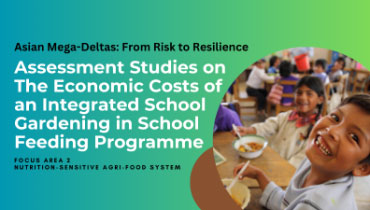
Assessment Studies on The Economic Costs of an Integrated School Gardening in School Feeding Program
CGIARRecognize the important of improving the nutrition and education of children, Cambodia government is implementing school feeding program collaboratively with local and international NGOs. The implementation of this program will im...
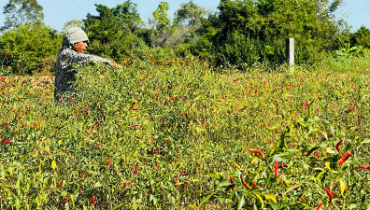
Profitability and Efficiency of Chili Production in Cambodia
International Fund for Agriculture DevelopmentChilies are one of the most important and widely consumed spices in Cambodia, as well as a source of income for many smallholder farmers. However, chilies production faces several challenges, such as low productivity, high input c...
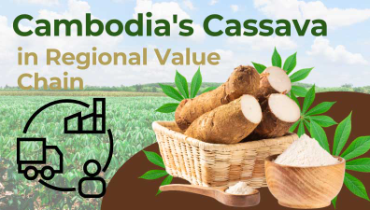
Cambodia's Cassava in Regional Value Chain
Feed the Future Innovation Lab for Food Security Policy Research, Capacity, and InfluenceCassava is a key agricultural commodity in Cambodia, where it ranks second only to rice in terms of production and consumption. The cassava sector in Cambodia offers significant opportunities for improving food security, rural liv...
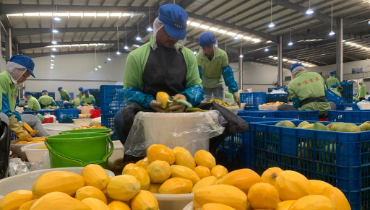
Market Access for Agricultural Commodities from Mekong Sub-region Countries to China: Case of Cambodia
International Fund for Agriculture DevelopmentAgriculture remains significant for Cambodia's economic growth, although the share of GDP and employment has declined in recent years. Agricultural export value has increased from 566 million USD in 2016 to 1,693 million USD in 2...
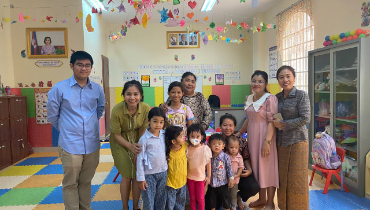
Evidence-based Policy Study: Supply and Demand Solutions for Accessibility, and Affordable Childcare Services in Cambodi...
The World BankThe World Bank project on “Evidence Based Policy Study: Supply and Demand Solutions for Accessibility and Affordable Childcare Services in Cambodia” examines the interlink between supply and demand for childcare services to ana...
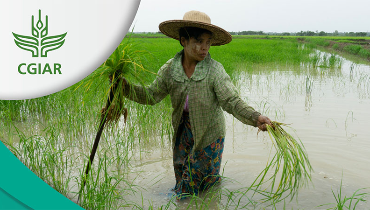
Asian Mega-Deltas: From Risk to Resilience
CGIAR | WorldFishTo address urgent concerns on climate change, the CGIAR, together with its centres and development partners, is officially launching the Securing the Food Systems of Asian Mega-Deltas for Climate and Livelihood Resilience (AMD). T...
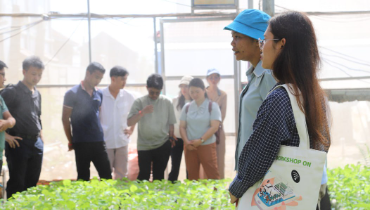
Research on Main Innovation Model in Agriculture And Rural Development
International Fund for Agriculture DevelopmentResearch on Main Innovation Model in Agriculture And Rural Development is a regional study that aims to review recent innovation models in agriculture and rural development with lessons learned for future policy improvement.

Digital Economic Integration of MSMEs in the Global South
IT for ChangeIT for Change, Institute of Development Studies (IDS) and country partners are preparing a project on “Digital Economic Integration of MSMEs in the Global South”, focusing on micro, small and medium enterprises (MSMEs). Due to the...
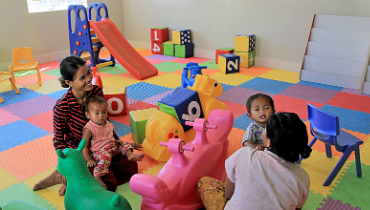
Childcare Availability Study
The World BankThe World Bank’s East Asia and Pacific Chief Economist Office is preparing a regional flagship report on childcare. The report is exploring how childcare availability can promote equity and growth objectives and how childcare can...
There is no data list!
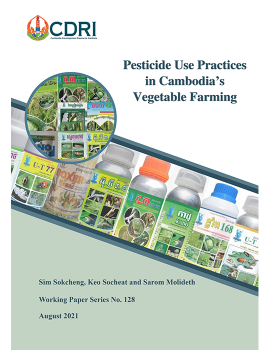
Pesticide Use Practices in Cambodia’s Vegetable Farming
Pesticides are agricultural technologies that farmers use to control pests and weeds and remain an important modern input for crop production including vegetable farming. There are many types of pesticides, such as insecticides, fungicides, rodenticides and herbicides, that target different threats to crops. While the potential production benefits of chemical pesticides are undeniable, people are...
The Effect of Parental Migration on the Schooling of Children Left behind in Rural Cambodia
Growing rural-to-urban and international migration flows have sparked concerns about the investments in the education of the children left behind in Cambodia. We draw on a panel household-level survey conducted in rural villages in 2014 and 2017 to analyse the relationship between parental migration and children’s schooling. The analysis shows that children of migrant parents complete less years o...
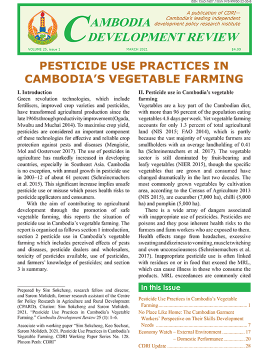
Pesticide Use Practices in Cambodia’s Vegetable Farming
Pesticides are agricultural technologies that farmers use to control pests and weeds and remain an important modern input for crop production including vegetable farming. There are many types of pesticides, such as insecticides, fungicides, rodenticides and herbicides, that target different threats to crops. While the potential production benefits of chemical pesticides are undeniable, people are...
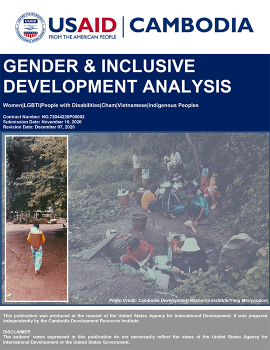
Gender and Inclusive Development Analysis
This study reports the results of a comprehensive gender and inclusive development analysis (GIDA) to inform the United States Agency for International Development (USAID)‟s workplans regarding Cambodia‟s Country Development Cooperation Strategy (CDCS) for 2020– 2025. The GIDA uses a combination of quantitative and qualitative methods to identify macro and sectoral level gender gaps, social inequa...
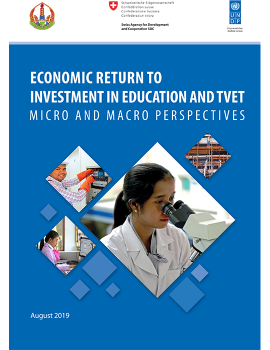
Economic Return to Investment in Education and TVET: Micro and Marco Perspectives
This study is a part of the UN Joint Programme through which the UNDP seeks to examine the relationship between the economic/monetary returns of investments in education and technical vocational education and training (TVET) at individual, household and national levels. The overall objectives of the study are (1) to estimate the rate of return at the individual, household and national level, of in...
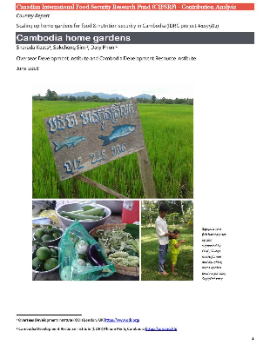
Scaling up Home Gardens for Food & Nutrition Security in Cambodia
This report reviews a project funded under the research program called “Scale up of Homestead Food Production for Improved Nutrition in Cambodia”, also known as “Family Farms for the Future (FF4F)”. The project tries to capture FF4F’s immediate and potential contribution to food security. FF4F aims to help three main groups: large-scale producers of fish fingerlings, home gardeners and village mod...
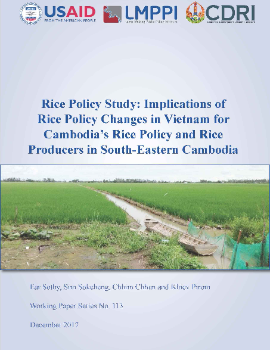
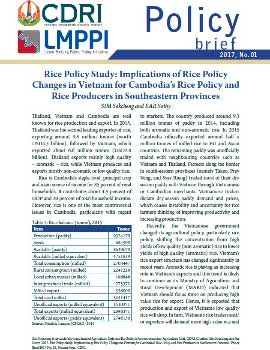
Rice Policy Study: Implications of Rice Policy Changes in Vietnam for Cambodia’s Rice Policy and Rice Producers in South-Eastern Cambodia
There are many studies about rice production in Cambodia, but none focus on the geographical location of rice production, particularly in the south-eastern provinces of Prey Veng, Takeo and Svay Rieng. Farmers in these areas produce mainly low-value rice (IR504) most of which is exported as wet paddy to Vietnam. The Vietnamese government recently decided to restructure its economic and agricultura...
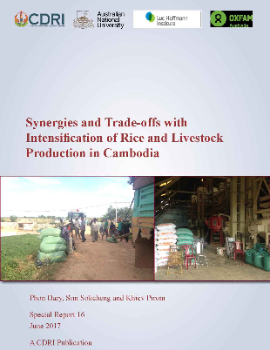
Synergies and Trade-offs with Intensification of Rice and Livestock Production in Cambodia
This study examines the benefits, risks and costs of changing from flood recession to intensive irrigated agriculture in Cambodia. Methods used include food supply calculation, nutritional supply estimation, potential production area projection, water use estimation, and energy consumption estimation. Three scenarios were designed to model current food supply and projected food production (in term...

The 1st WEBINAR on Methodology and approach of the Regional joint-research: “Assessment of rice sector development in selected sub-Mekong countries
In the PY3 – 2021, under the framework of the project Network for Agriculture and Rural Development Think-tanks for Countries in Mekong sub-region (NARDT) funded by the International Fund for Agricultural Development (IFAD), IPSARD and CFPs in CLMV will jointly organise WEBINARs to promote knowledge sharing through regular information exchange and policy advocacy while overcoming international travel restrictions due to impacts of the COVID-19 pa...
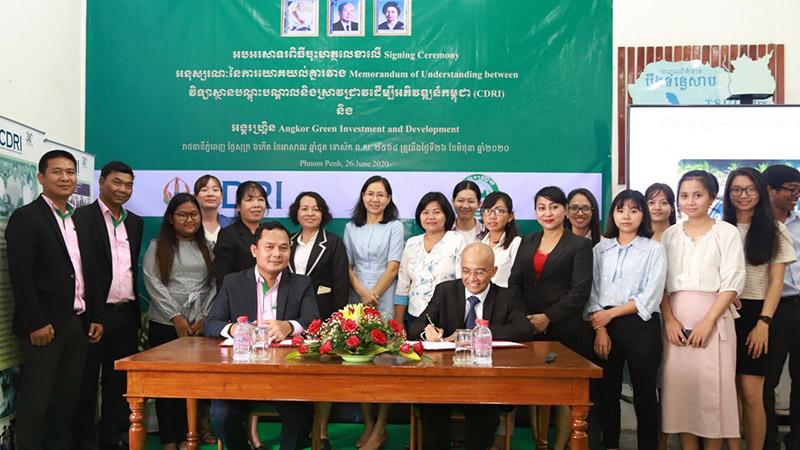
Angkor Green and CDRI signed an MOU
Angkor Green https://angkorgreen.com.kh/ and CDRI signed an MOU on development research in PPP, agriculture value chains, agro-business development, innovation and technology for agricultural productivity, access to market, and product information and know-how.As an independent development policy think tank, CDRI is to contribute to Cambodia’s sustainable development and the well-being of its people in partnership with Cambodian public institutio...