SIM Sokcheng
Senior Research Fellow and Centre Director
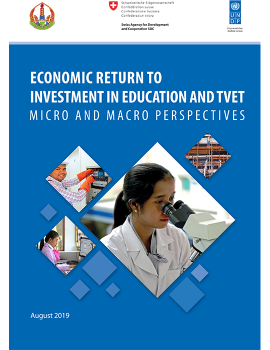
This study is a part of the UN Joint Programme through which the UNDP seeks to examine the relationship between the economic/monetary returns of investments in education and technical vocational education and training (TVET) at individual, household and national levels. The overall objectives of the study are (1) to estimate the rate of return at t...
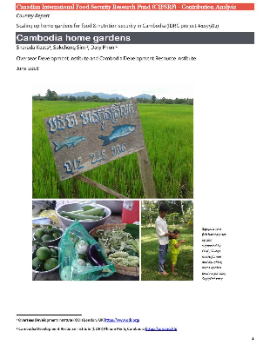
This report reviews a project funded under the research program called “Scale up of Homestead Food Production for Improved Nutrition in Cambodia”, also known as “Family Farms for the Future (FF4F)”. The project tries to capture FF4F’s immediate and potential contribution to food security. FF4F aims to help three main groups: large-scale producers o...
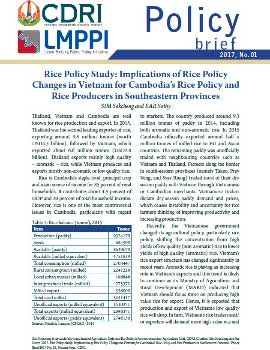
There are many studies about rice production in Cambodia, but none focus on the geographical location of rice production, particularly in the south-eastern provinces of Prey Veng, Takeo and Svay Rieng. Farmers in these areas produce mainly low-value rice (IR504) most of which is exported as wet paddy to Vietnam. The Vietnamese government recently d...
This study examines the benefits, risks and costs of changing from flood recession to intensive irrigated agriculture in Cambodia. Methods used include food supply calculation, nutritional supply estimation, potential production area projection, water use estimation, and energy consumption estimation. Three scenarios were designed to model current...
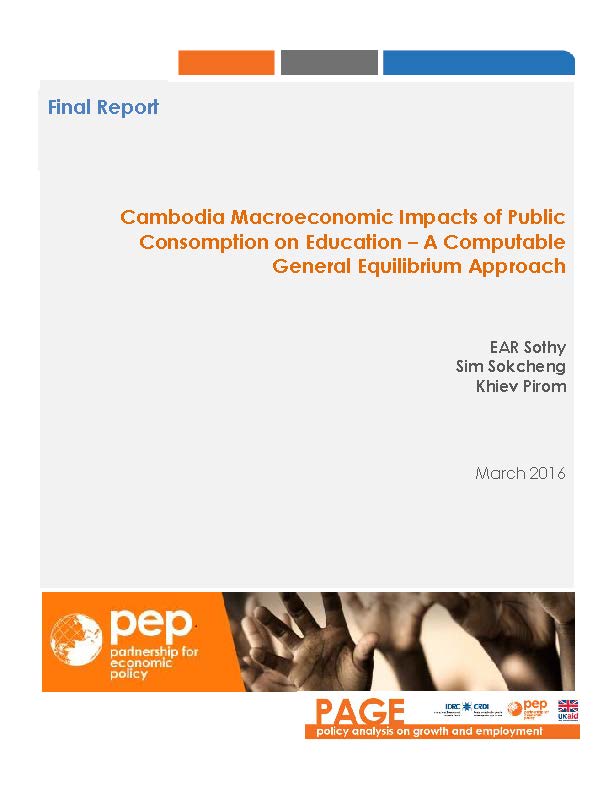
Lack of human capital is seen as one of the most significant constraints for Cambodia to be more competitive and to reach upper-middle-income country status. A recent discussion among researchers, policymakers, the private sector and development partners reached a broad consensus that a skills gap is emerging in Cambodia. In spite of concerted effo...
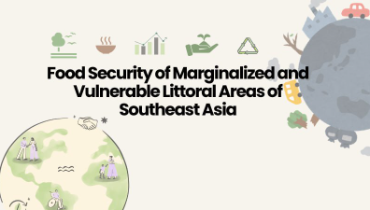
Feed the Future Innovation Lab for Food Security Policy Research, Capacity, and Influence (PRCI) is a project funded by USAID to enhance the ability of local policy research organizations to conduct high-quality food security policy research and influence food security policy more effectively while becoming increasingly self-reliant. Since 20...
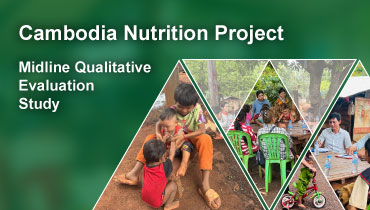
The Cambodia Nutrition Project (CNP) is a seven-year, US$62.5 million project to anchor the RGC’s enhanced and coordinated response to accelerate the human capital formation focusing on maternal and child health and nutrition (MCHN) in the early years. The CNP addresses Cambodia’s persistent high levels of stunting and aims to close equity gap...
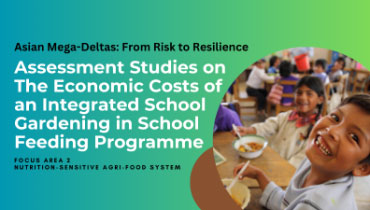
Assessment Studies on The Economic Costs of an Integrated School Gardening in School Feeding Program
Recognize the important of improving the nutrition and education of children, Cambodia government is implementing school feeding program collaboratively with local and international NGOs. The implementation of this program will improve food security, education, health and nutrition, local economy and agriculture, partnership and coordination across...
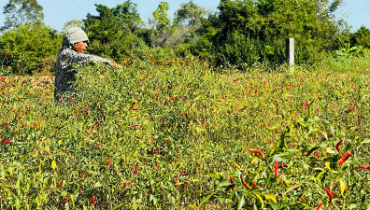
Chilies are one of the most important and widely consumed spices in Cambodia, as well as a source of income for many smallholder farmers. However, chilies production faces several challenges, such as low productivity, high input costs, pest and disease outbreaks, lack of quality seeds and planting materials, poor post-harvest handling and marketing...
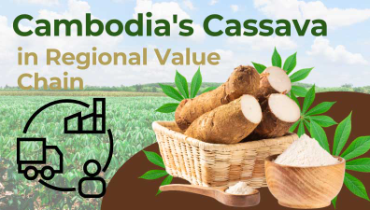
Cassava is a key agricultural commodity in Cambodia, where it ranks second only to rice in terms of production and consumption. The cassava sector in Cambodia offers significant opportunities for improving food security, rural livelihoods, and bioenergy development. However, the sector faces several post-harvest challenges that affect its quality a...
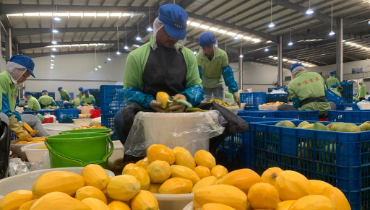
Agriculture remains significant for Cambodia's economic growth, although the share of GDP and employment has declined in recent years. Agricultural export value has increased from 566 million USD in 2016 to 1,693 million USD in 2021, making its share of total exportsreach 9.64 percent in 2021. China has been one of the main exporting destinations...
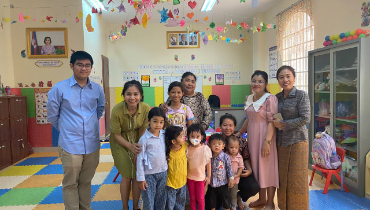
The World Bank project on “Evidence Based Policy Study: Supply and Demand Solutions for Accessibility and Affordable Childcare Services in Cambodia” examines the interlink between supply and demand for childcare services to analyze the correlation between the supply and demand for daycare centers and employment rates. This is an emerging concern...
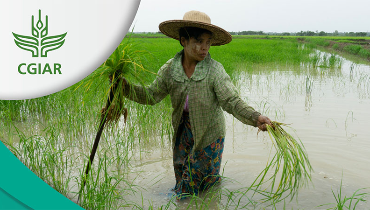
To address urgent concerns on climate change, the CGIAR, together with its centres and development partners, is officially launching the Securing the Food Systems of Asian Mega-Deltas for Climate and Livelihood Resilience (AMD). The initiative aims to create resilient, inclusive, and productive deltas by removing systemic barriers to the scaling of...
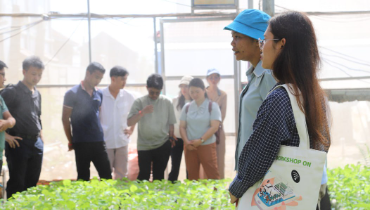
Research on Main Innovation Model in Agriculture And Rural Development is a regional study that aims to review recent innovation models in agriculture and rural development with lessons learned for future policy improvement.

IT for Change, Institute of Development Studies (IDS) and country partners are preparing a project on “Digital Economic Integration of MSMEs in the Global South”, focusing on micro, small and medium enterprises (MSMEs). Due to the Covid-19 pandemic, MSMEs of low-income populations have faced abrupt economic downturn in which the global consensus ev...